
When a business expands into multiple cities or neighborhoods, ranking in local search becomes more complicated. A single homepage usually isn’t enough to rank for every location. Google wants to show results that are highly relevant to the searcher’s city or neighborhood.
That’s where local SEO for multiple locations becomes essential. Instead of trying to rank one page everywhere, you build a system where each location sends strong signals to search engines. This includes location pages, Google Business Profiles, local reviews, and consistent local citations.
In this guide, we’ll walk through how multi location SEO actually works, the tactics businesses use to scale location SEO, and how service companies implement local SEO best practices to grow across cities.
Table of Contents
What Is Local SEO?
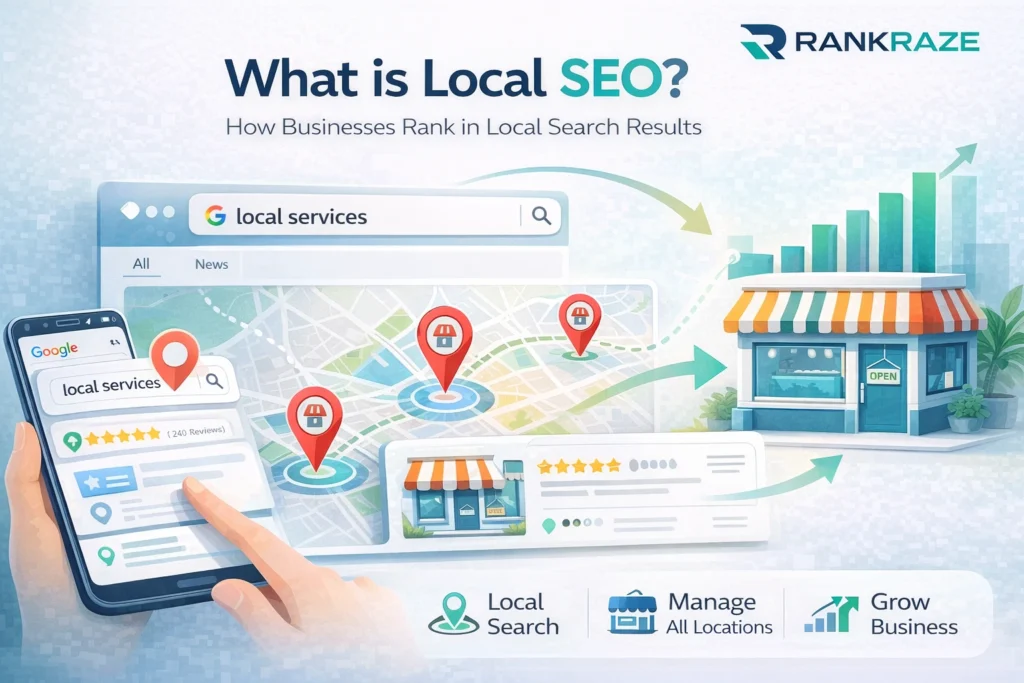
Local SEO is the process of optimizing a business so it appears in location-based search results. When someone searches for “SEO agency near me” or “digital marketing services in London,” Google prioritizes businesses that clearly signal their geographic relevance.
These signals come from several places. Google Business Profiles, local citations, reviews, and location pages all help search engines understand where a business operates. When these elements work together, the business becomes more visible in the local pack, maps results, and organic rankings.
For service companies and agencies, search engine optimization for local business is often the main source of qualified leads. Businesses that invest in strong local SEO optimisation tend to capture customers who are already searching for nearby services.
What Is Multi-Location SEO?
Multi location SEO is the strategy used by businesses that operate in several cities or branches. Instead of optimizing the website for a single area, the goal is to help each location rank independently in its own local market.
For example, a digital marketing agency might want to rank for:
- SEO agency London
- SEO agency Manchester
- SEO agency Birmingham
To achieve this, each location needs its own signals. These signals include dedicated landing pages, local citations, reviews, and location-specific keywords. Together, these elements form the foundation of localized SEO.
Without this structure, search engines may struggle to determine which page should rank for a specific city. That’s why businesses expanding into multiple locations must implement local SEO for businesses carefully.
Local SEO for Multiple Locations Example
We run a project for a coworking brand in India operating in several neighborhoods within the same city – Chennai. If the company lists all locations on one page, Google may not clearly associate each branch with the correct search queries.
Instead, the company creates individual pages targeting each area. For example:
- coworking space in Guindy
- coworking space in Anna Nagar
- coworking space in OMR
Each page includes local information, directions, services, and reviews specific to that area. This helps Google understand the relevance of the page and improves location SEO for those neighborhoods.
This same strategy works for agencies, real estate companies, retail chains, and service providers operating across multiple regions.
Benefits of Local SEO for Businesses With Multiple Locations
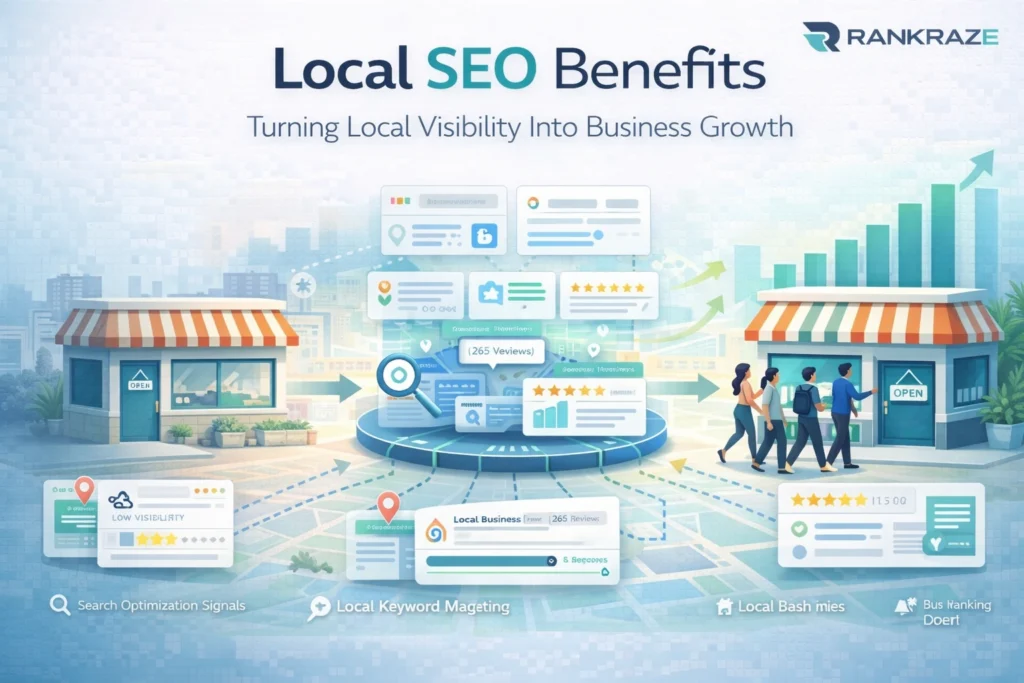
Businesses that implement multi location SEO correctly gain several advantages in search visibility and customer acquisition. One of the biggest benefits is increased presence in local search results. Instead of competing with a single page, each location can appear independently in its geographic area.
Another benefit is improved user trust. When users land on a page that mentions their specific city, nearby landmarks, and local testimonials, they feel more confident about contacting the business. These signals strengthen local search optimisation and help convert visitors into customers.
Finally, local SEO tactics allow businesses to scale their marketing strategy. Once the system is established, adding new cities becomes easier because the same structure can be replicated for each new location.
For more: 30+ Local SEO Statistics for 2026: Data, Trends, Conversion Rates & Google Maps Insights
Top Multi-Location SEO Tactics
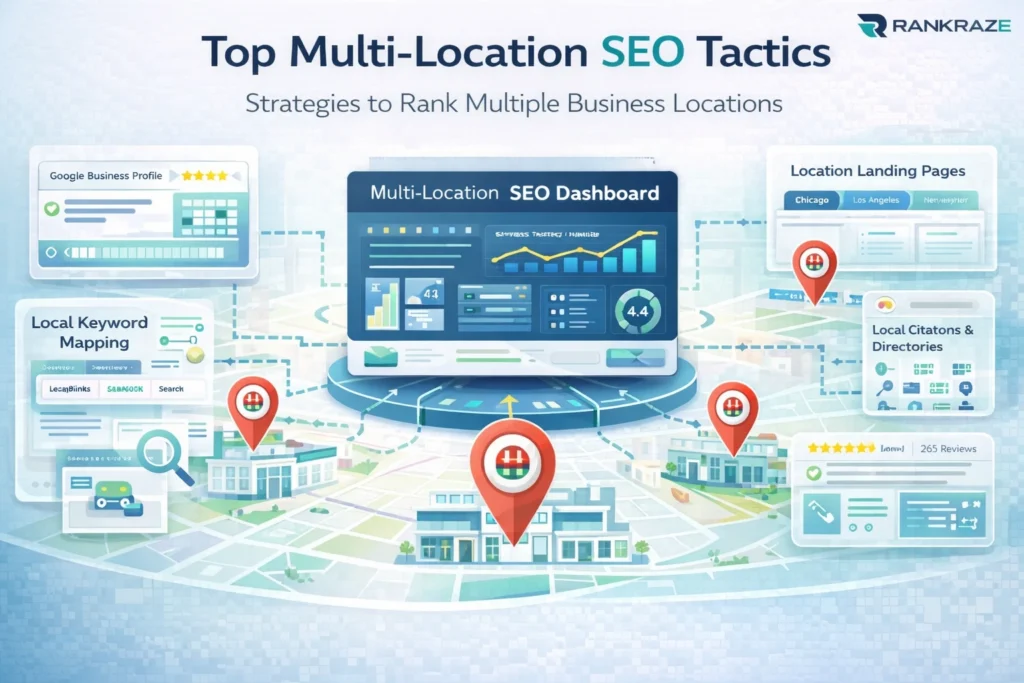
Managing SEO for several locations requires a mix of technical optimization, local authority building, and structured content. Below are some of the most effective local SEO best practices used by businesses that operate in multiple cities.
Optimize Google Business Profile for Each Location
Each branch should have its own Google Business Profile. Google uses these profiles to determine which businesses appear in the local pack and Google Maps results. If multiple locations share one listing, search engines cannot accurately match searches to the correct branch.
Every profile should contain accurate business details including address, phone number, services, and operating hours. Adding photos, updates, and customer reviews helps strengthen trust and engagement. Maintaining separate listings ensures that each location can compete effectively in google local search optimization results.
Create Landing Pages for Each Location
Dedicated landing pages are the backbone of local SEO for multiple locations. These pages allow businesses to target specific cities or neighborhoods while providing useful information to visitors.
Each location page should contain:
- city-specific service descriptions
- local testimonials
- nearby landmarks
- maps and contact details
These are often referred to as city pages for service area businesses. When optimized correctly, they help search engines understand which page is relevant for a particular search query.
For example, many businesses working with an experienced SEO team use dedicated service pages that explain how professional optimization improves local rankings.
Local Keyword Mapping
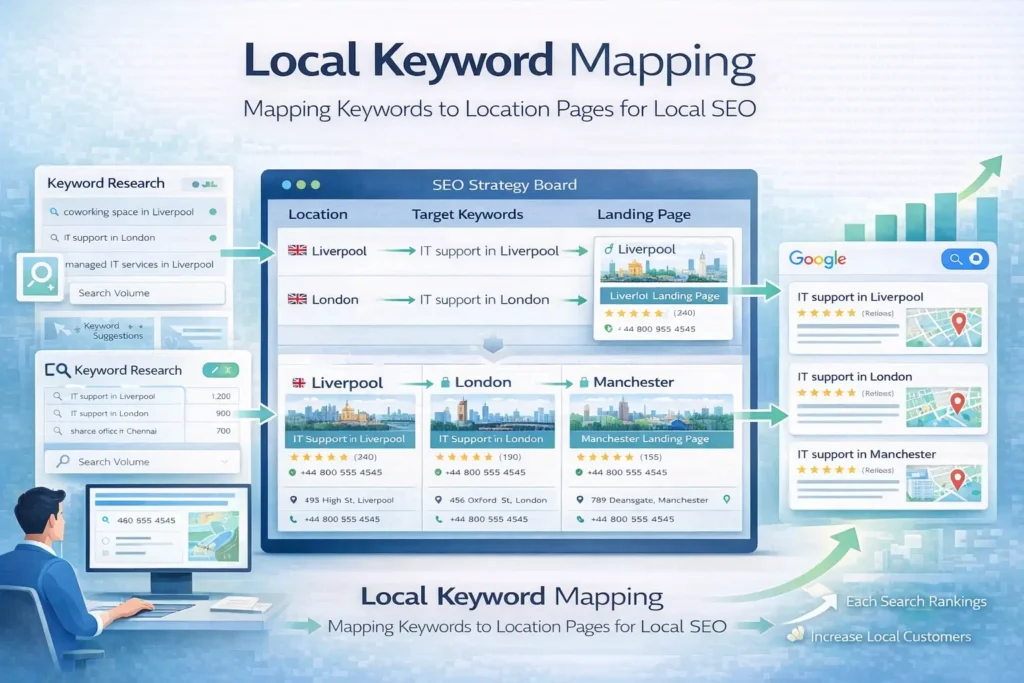
Keyword mapping ensures that each location page targets a specific geographic keyword. Instead of competing against each other, pages focus on their own cities or neighborhoods.
For example:
| Location Page | Target Keyword |
| London | SEO agency London |
| Manchester | SEO services Manchester |
| Birmingham | digital marketing Birmingham |
This prevents keyword cannibalization and strengthens location SEO signals across the website.
Local Citations and Directories (Consistent NAP Data)
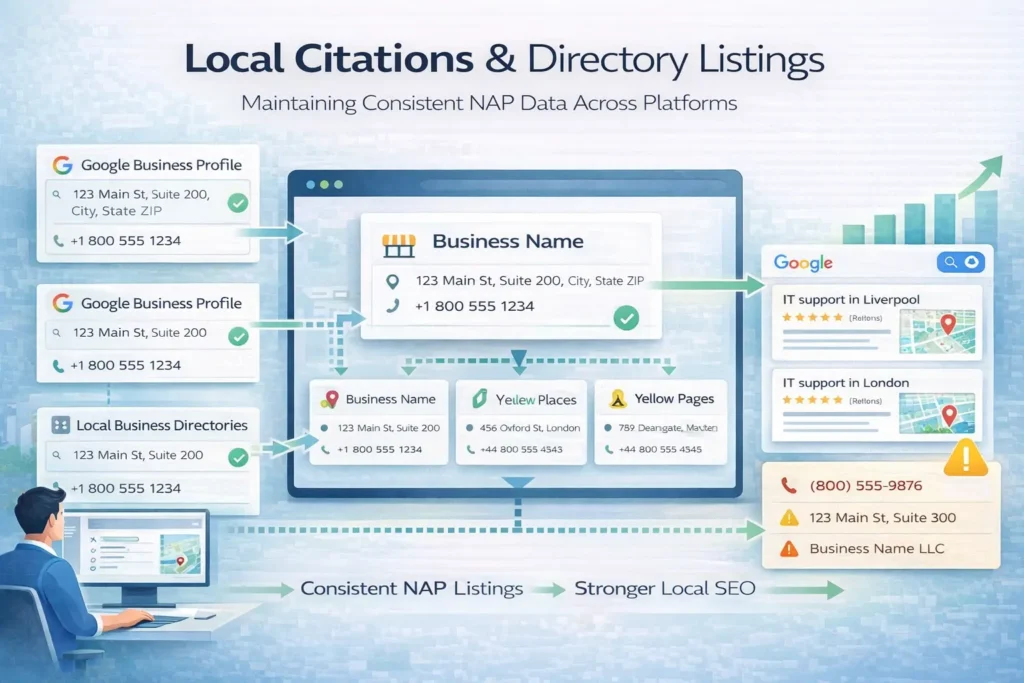
Local citations are mentions of your business name, address, and phone number across the web. These citations appear on platforms such as Google Business Profile, Yelp, and other business directories.
Consistency is extremely important. If your NAP information differs across platforms, search engines may struggle to trust your data. Maintaining consistent listings improves credibility and strengthens local search optimisation.
Local Backlinks
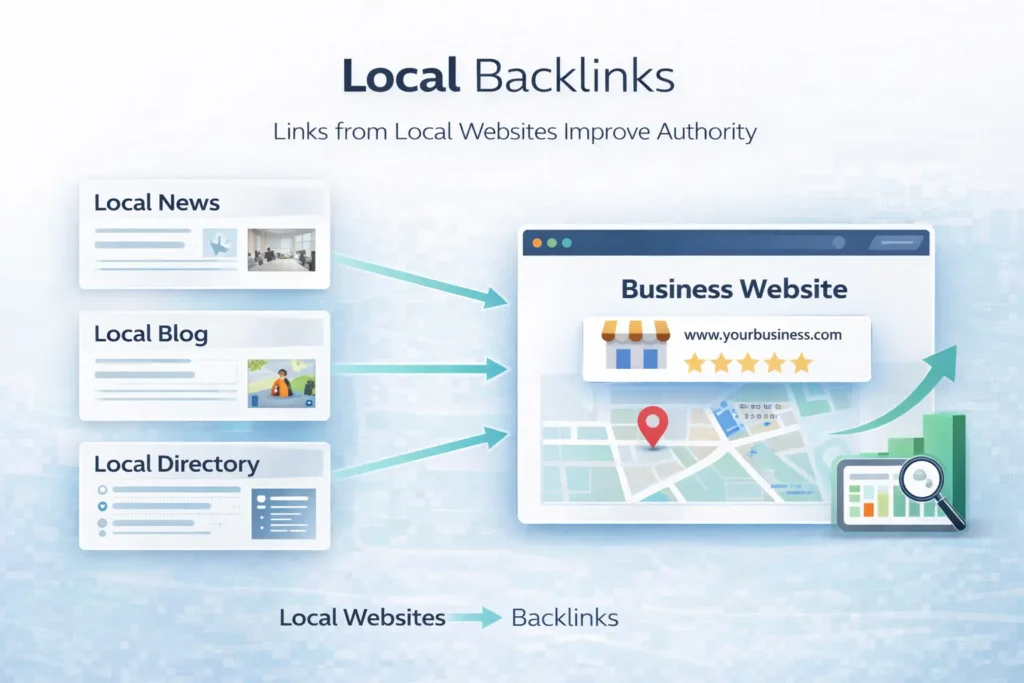
Backlinks from local websites help improve authority for location pages. These links can come from local news sites, business associations, or partnerships with other local organizations.
For example, estate agencies often invest in SEO for estate agents by building links from property portals and regional news websites. These backlinks reinforce geographic relevance and strengthen localized SEO signals.
Collect Local Reviews
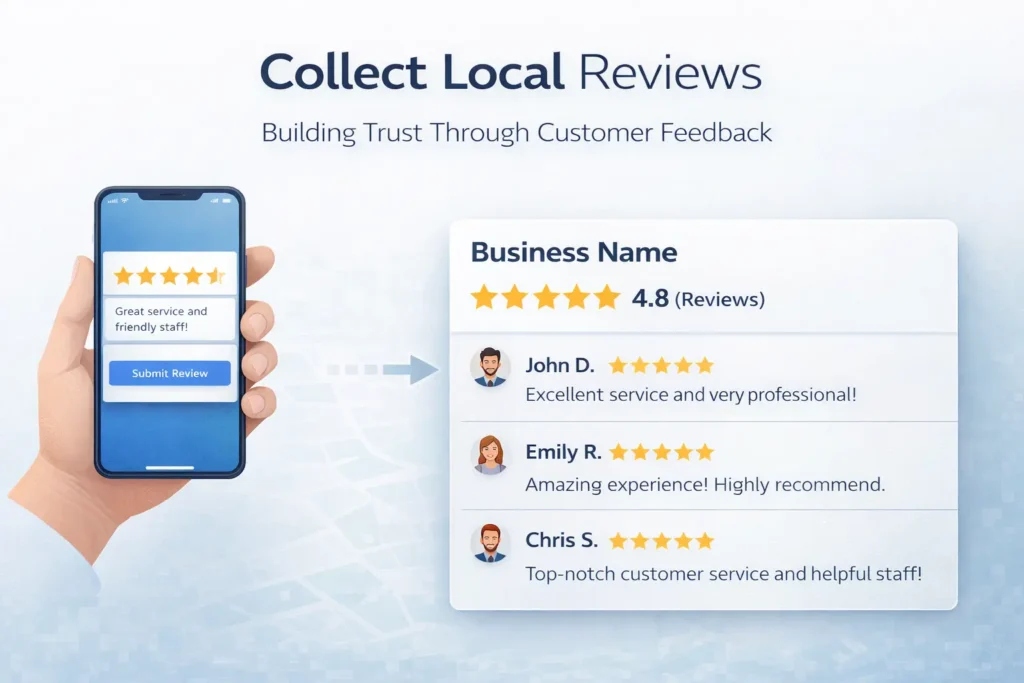
Reviews are a major ranking factor in local SEO for businesses. Encouraging customers to leave feedback on Google Business Profile helps improve both visibility and trust.
Each location should collect reviews independently. When reviews mention specific services and cities, they reinforce the geographic relevance of the business. Responding to reviews also shows engagement and helps maintain a positive reputation.
Structured Data (Schema Markup)
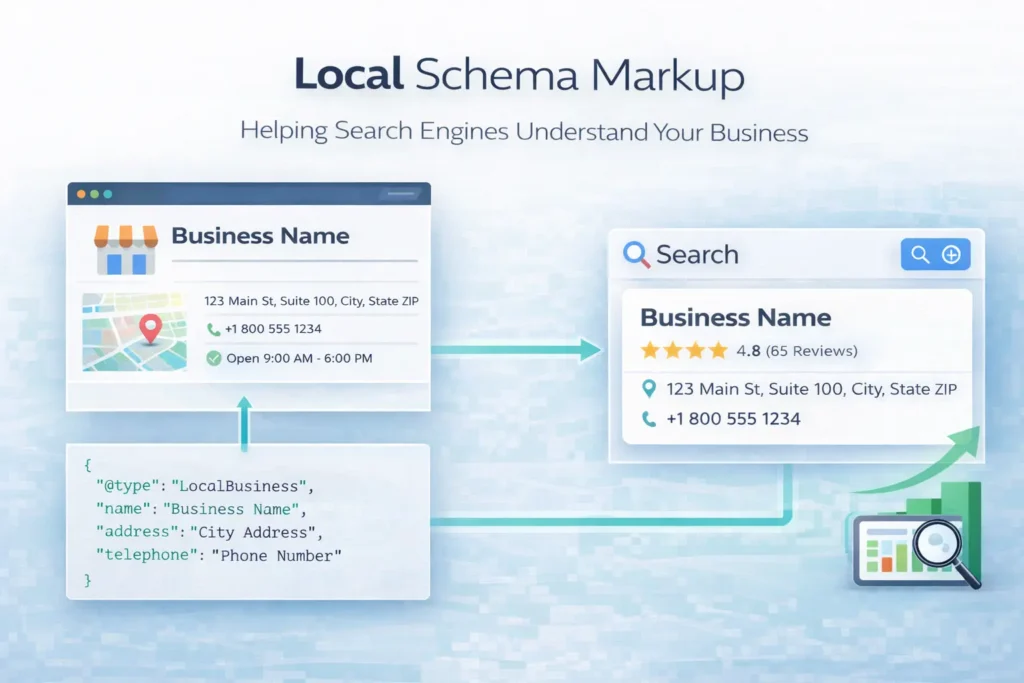
Structured data helps search engines understand the details of your business locations. Adding schema markup such as LocalBusiness schema allows you to specify addresses, services, and reviews in a format that search engines can easily interpret.
This improves how Google processes location information and supports stronger local SEO optimisation strategies.
Showing Up in AI Platforms Like ChatGPT

Search behavior is changing as more users rely on AI tools to find businesses. Platforms like ChatGPT and voice assistants often reference well-structured websites that provide clear answers and organized information.
Businesses implementing strong local search optimisation and structured location pages are more likely to appear in these AI-driven recommendations. Clear content, FAQs, and well-organized location pages help AI systems understand the services a business offers.
Multi-Location SEO Checklist
Use this checklist to evaluate your multi location SEO strategy:
✔ Create a Google Business Profile for every location
✔ Build unique landing pages for each city
✔ Map keywords to individual pages
✔ Maintain consistent NAP data across directories
✔ Build backlinks from local websites
✔ Encourage customers to leave reviews
✔ Add schema markup to location pages
✔ Monitor performance for each location
Following these steps ensures that businesses maintain strong local SEO tactics across all locations. And a right SEO agency can do it clearly for you, so you might not wanna be feel overwhelmed. If you’re running a business, then it’s better to hire a digital marketing agency.
Conclusion
Expanding into multiple locations opens significant opportunities for growth, but it also requires a structured SEO strategy. Businesses must send clear geographic signals so search engines can match each location with relevant search queries.
By implementing dedicated location pages, optimizing Google Business Profiles, and building local authority through reviews and backlinks, businesses can improve their local SEO for multiple locations. These efforts help each branch appear in local search results and attract customers actively searching for nearby services.
What is multi-location SEO?
Multi-location SEO is the process of optimizing a business that operates in several cities or branches so that each location can rank in local search results.
How many location pages should I create?
Businesses should ideally create one page for every location or service area. Each page should contain unique content tailored to that location.
Should franchises use separate websites or subdomains?
Most franchises benefit from keeping all locations on a single domain with dedicated location pages. This approach consolidates authority and improves local search optimisation performance.
How long does multi-location SEO take to show results?
Results usually begin appearing within three to six months depending on competition and domain authority.
How do I avoid duplicate content for location pages?
Create unique content for each page including testimonials, service details, and local information. Avoid copying the same text across multiple pages.
Can multiple locations rank in one city?
Yes. Businesses operating in different neighborhoods can rank for each area when they create optimized pages targeting those locations.
Example – multiple locations in one city
A coworking brand operating across several neighborhoods can create location pages for each area. These pages target specific neighborhood keywords and help the business appear in more localized searches.
How do you optimize geographic performance metrics for multi-location businesses?
Use tools such as Google Search Console and analytics platforms to track traffic and rankings for each location page. Monitoring performance helps identify which areas require stronger local SEO tactics.