
If you search for “SEO tips for small businesses,” you’ll find dozens of articles saying the same things — do keyword research, create content, build backlinks, optimise your site.
None of that is wrong.
But here’s the issue.
Most of those articles stop at what to do. They rarely show you how to actually do it in your day-to-day business. And that’s exactly where small businesses get stuck.
Because you don’t need more theory. You need something you can sit down with and apply — step by step — without feeling like you need an SEO team.
So in this guide, I’m going to walk you through the same core SEO principles you’ve probably heard before, but in a way that actually makes sense in real life. You’ll see where to click, what to look for, and how to make decisions based on what you see.
Let’s start from the foundation.
Table of Contents
1. Start With What People Are Actually Searching (Not What You Think They Search)
Most people begin SEO by opening a tool like Semrush and typing random keywords. That’s fine, but it’s not where you should start.
Instead, open Google.
Type your main topic — for example, “SEO tips for beginners.” Don’t overthink it. Just search.
Now pause and observe.
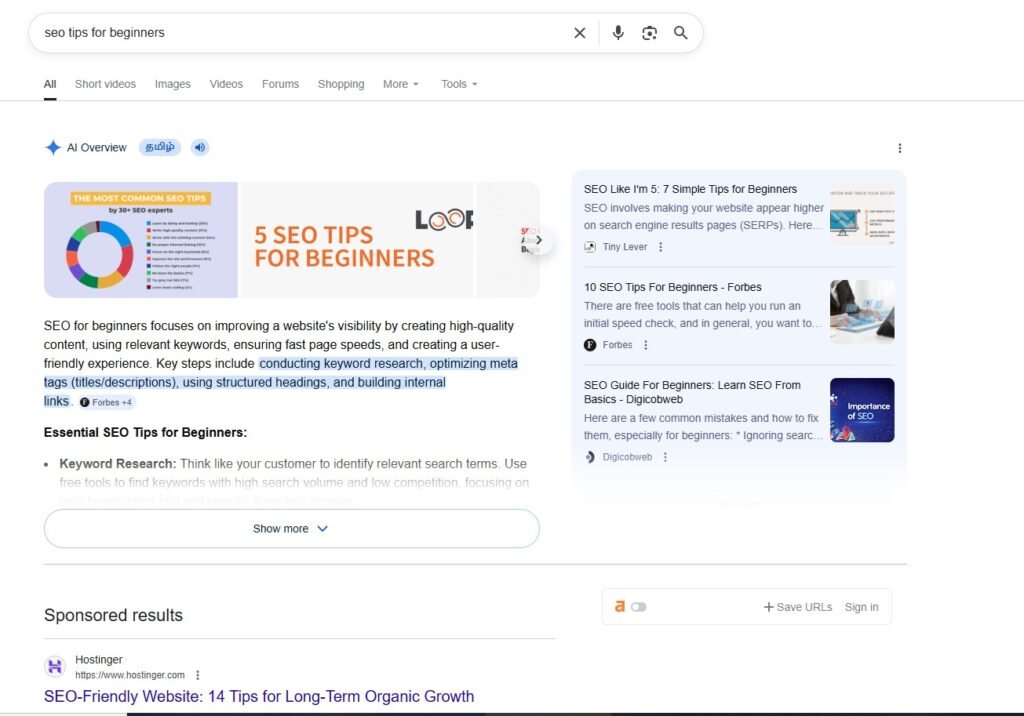
Look at the results carefully. Are they all listicles? Beginner guides? Agency pages? In this case, you’ll notice almost every result is a list-style guide written for beginners. That tells you something important: Google expects a practical, easy-to-follow article — not a technical deep dive.
Now scroll down and look at the “People also ask” section. Open a few of those questions. Then scroll further and look at “People also ask for.”
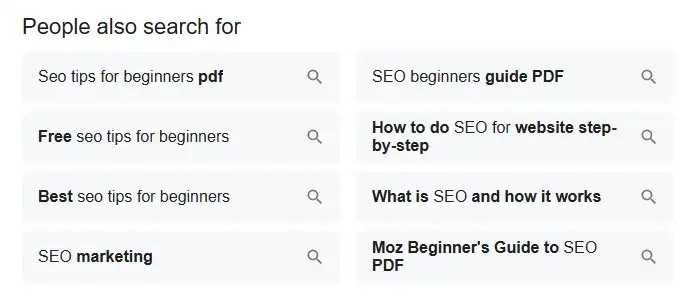
What you’re doing here is not keyword research yet. You’re trying to understand what people are actually confused about.
Once you’ve done that, now open Semrush (or any keyword tool you use).
Go to Keyword Overview and type your main keyword. Don’t just look at volume. Instead, click into keyword variations and questions.
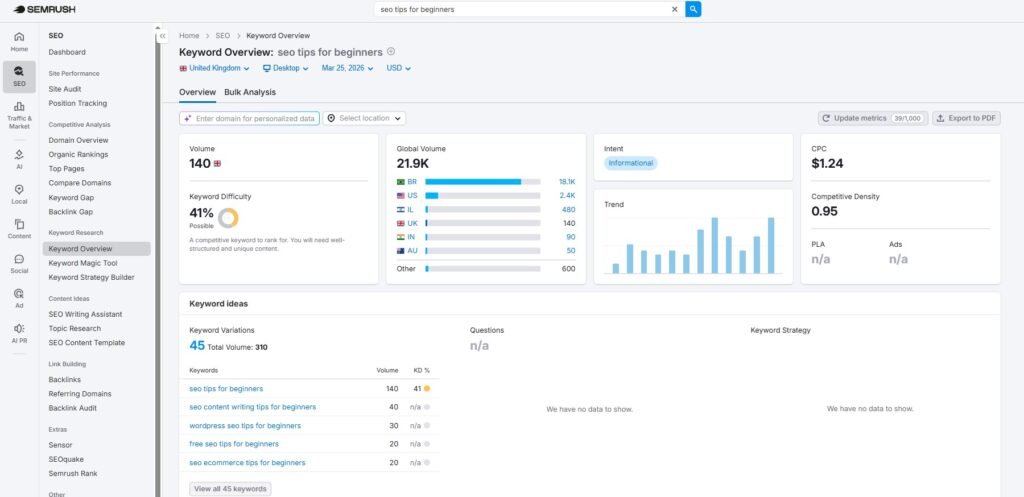
Now you’ll start seeing patterns:
- “SEO tips for beginners”
- “SEO content writing tips for beginners”
- “free SEO tips for beginners”
Pick 3–5 keywords that feel close to what you saw on Google earlier. That alignment is important. It means you’re not blindly trusting a tool — you’re validating real search behaviour.
That’s how you build a keyword list that actually converts.
2. Set Up Your Google Business Profile Like It Actually Matters (Because It Does)
If your business serves a location, this step is not optional. Stats shows that 96% of consumers search online before visiting a local business. It’s probably the fastest way to start getting visibility.
But here’s the mistake most people make — they create a Google Business Profile, fill in a few details, and leave it.
That’s not optimisation. That’s just existence.
So let’s do this properly.
First, go to your Google Business Profile dashboard. If you don’t have one, create it. Then start with your business name — make sure it matches exactly how it appears everywhere else online. Consistency matters more than you think.
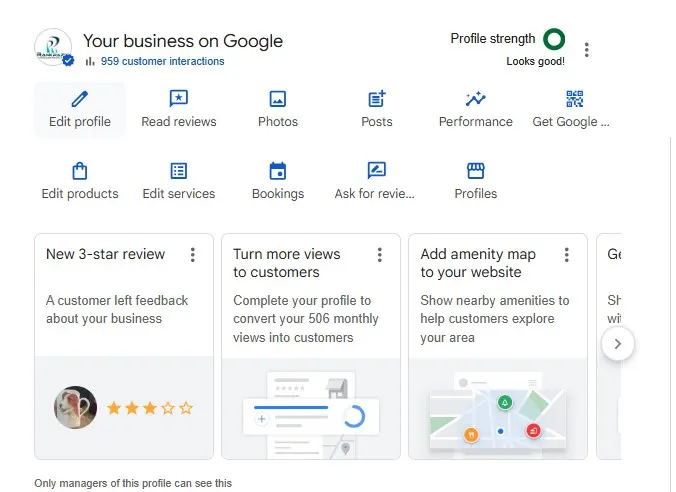
Next, choose your primary category carefully. Don’t just pick something broad. If you’re an SEO agency, choose “SEO services” or something very close — not “marketing company” unless that’s your actual focus.
Now move to your description. Don’t write something generic like “we provide quality services.” Instead, describe what you do in a way that includes natural keywords. For example, mention “SEO services for small businesses in the UK” if that’s your focus.
Then upload real photos. Not stock images. Real ones — your workspace, your team, your projects. Google actually uses this as a trust signal.
Now comes the part most people skip — reviews.
Reach out to your existing customers. Don’t send a mass message. Just ask them personally:
“Hey, if you found our work helpful, it would really help us if you could leave a quick Google review.”
When they leave a review, reply to it. Not with “thank you,” but with something meaningful. Mention what service you provided. This subtly reinforces your relevance.
Finally, go into the “Services” section and add detailed service descriptions. This is where you can naturally include phrases like “local SEO,” “SEO for small businesses,” etc.
If you do all of this properly, your profile stops being just a listing — it becomes a ranking asset.
3. Create Content That Answers Real Questions (Not Just Describes Your Service)
This is where most businesses go wrong.
They write content about themselves instead of writing for their audience.
So let’s fix that.
Go back to the questions you found earlier (from Google or Semrush). Pick one.
Let’s say the question is: “Is SEO worth it for small businesses?”
Now imagine someone typing that. They’re not looking for a definition. They’re trying to decide whether to invest time or money.
So when you write, structure your content around that decision:
- What SEO actually does
- When it works
- When it doesn’t
- Realistic expectations
This is what makes content useful.
Now here’s the important part — don’t try to cover everything in one article. One page = one clear topic.
If you have multiple questions, create multiple articles. That’s how you build topical authority over time.
And always, at the end of your content, guide the reader. Don’t leave them hanging. If they’re ready, show them the next step — whether that’s contacting you, reading another guide, or exploring your services.
4. Structure Your Pages So Google (and Users) Don’t Get Confused
A lot of SEO problems are not about lack of content, but about lack of clarity.
Open your page and ask yourself:
“If someone lands here for the first time, will they immediately understand what this page is about?”
If the answer is no, fix the structure.
Start with your title. It should clearly reflect the topic. Then your H1 should reinforce it. After that, your subheadings should logically break down the topic.
For example, in this article:
- We start with intent
- Then move to local SEO
- Then content
- Then technical aspects
That flow matters.
Now check your URL. If it looks like /page?id=123, change it to something readable like /seo-tips-for-small-businesses.
Then check your internal links. Every page should connect to other relevant pages. If you’re talking about local SEO, link to your local SEO service page. If you mention keyword research, link to a detailed guide.
Think of your site like a network, not isolated pages.
5. Fix the Basic Technical Issues That Quietly Kill Your Rankings
You don’t need to understand advanced technical SEO, but you do need to fix the basics.
Start with your site speed.
Go to Google PageSpeed Insights and enter your URL. Look at the mobile score first, not desktop.
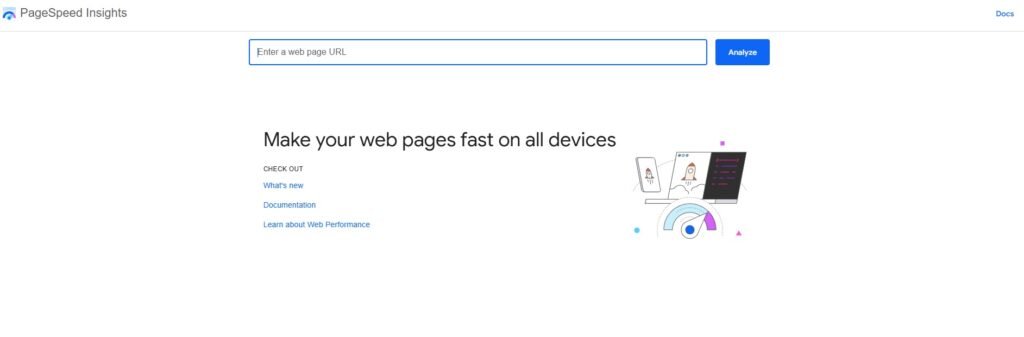
If your site is slow, it will usually tell you why. Most of the time, the issue is large images. So take your images, compress them using a tool like TinyPNG, and upload the smaller versions.
Next, check your site on your phone. Not on your computer — your actual phone. Is everything easy to read? Do buttons work properly? If something feels off, fix it.
For more: The Complete Guide to Mobile SEO (2026 Edition)
Then open Google Search Console. Go to the “Pages” section and check if there are any indexing issues. If some pages are not indexed, find out why.
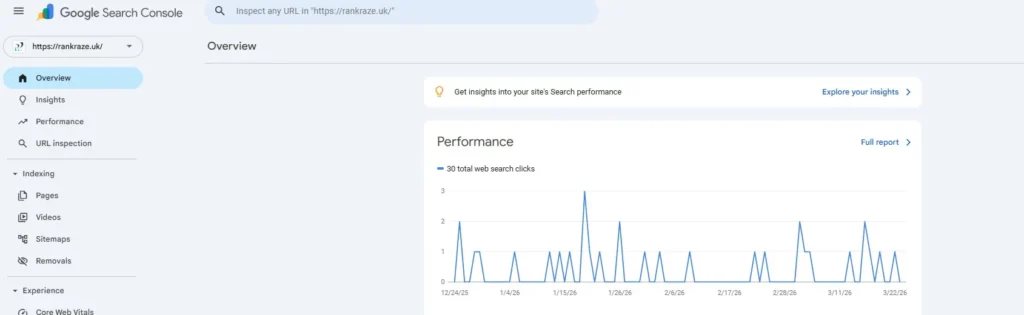
Also, submit your sitemap if you haven’t already. This helps Google understand your site structure faster.
You don’t need to obsess over technical perfection. Just remove the obvious barriers.
6. Build Backlinks in a Way That Actually Makes Sense
Backlinks are often overcomplicated.
For a small business, you don’t need a massive backlink strategy. You just need relevant visibility.
Start simple.
List your business in local directories. Not spammy ones — genuine business listings.
Then think about your network. Are there businesses you collaborate with? Ask if they can mention you on their site.
Next, look for local blogs or industry websites. Reach out and offer to contribute something useful — not promotional, but informative.
If you’re in a niche, share insights. That’s how you earn links naturally.
And here’s something important — don’t chase numbers. Ten relevant backlinks are better than a hundred random ones.
7. Create Location Pages That Match How People Search
This is one of the most powerful things you can do, and most small businesses don’t do it properly.
Instead of having one generic page, create pages for specific locations.
For example:
- Plumber services in London
- Plumber services in Manchester
Now when you create these pages, don’t just copy-paste content and change the location name.
Write it properly.
Mention:
- The location
- The type of businesses you work with there
- Any relevant context
Make it feel real.
Because Google is not just looking for keywords — it’s looking for relevance. Create a multiple pages also helps for Local SEO for Multiple Locations.
8. Use Internal Linking Like a Strategy, Not an Afterthought
Every time you publish a new page, ask yourself:
“Which page should this support?”
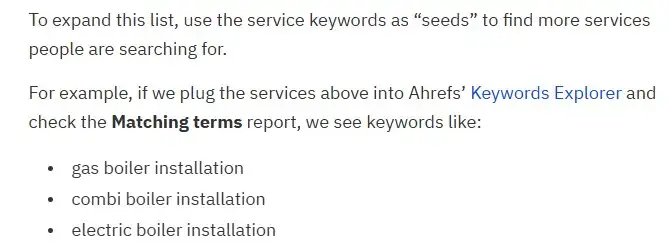
Then link to it naturally within your content. See the below example of how the ahrefs guides the viewer to move to touch the link.
If you have a service page, your blog content should point towards it. Not aggressively, but logically.
This does two things:
- It helps Google understand which pages matter
- It guides users towards taking action
Over time, this builds strength around your key pages.
9. Track What’s Happening (Otherwise You’re Guessing)
Install Google Analytics and Search Console if you haven’t already.
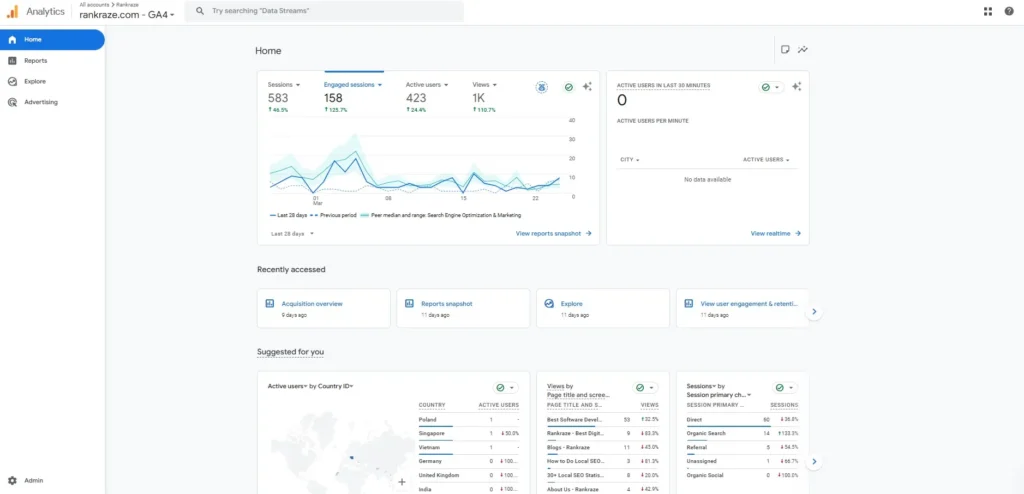
Now don’t just look at traffic numbers.
Look deeper.
Which pages are getting impressions but low clicks? That might mean your title needs improvement.
Which pages are getting traffic but no enquiries? That might mean your content is not aligned with intent.
Which keywords are you ranking for on page 2? Those are opportunities. Improve those pages.
SEO becomes much clearer when you look at real data instead of assumptions.
10. Stay Consistent — This Is Where Most People Drop Off
Most businesses start SEO with enthusiasm and stop after a few weeks.
That’s why it doesn’t work for them.
SEO is not something you do once. It’s something you build over time.
Set a simple system:
- Publish one useful piece of content regularly
- Update older content
- Improve existing pages
You don’t need to do everything at once. Just keep moving.
When You Need a System Instead of Scattered Effort
At some point, doing everything manually starts to break down.
You have keywords saved in one place, content ideas somewhere else, and performance data scattered across different tools. Nothing connects, and even simple decisions start taking more time than they should.
That’s usually the moment when effort alone isn’t the problem — the lack of structure is.
What actually helps here isn’t another tool, but a system. A way to connect your research, content, and tracking so that each step supports the next instead of working in isolation.
Because when your process is structured, you don’t just stay organised — you make better decisions faster.
This is where working with a SEO agency like Rankraze becomes useful. The goal isn’t to replace what you’re already doing, but to bring everything into a clear, consistent workflow — so your SEO and marketing efforts don’t feel scattered, and you can focus on what actually drives results.
Final Thought
SEO is not about doing everything perfectly.
It’s about doing the right things consistently, with clarity.
If you focus on:
- Understanding what people are searching
- Creating genuinely useful content
- Building relevance in your niche
You don’t need to compete with everyone.
You just need to be the most useful result for the people you want to reach.
And that’s where real growth starts.
Also Read: Digital Marketing for Small Businesses: 5 Strategies That Actually Work